Reviewing the Teacher Awesome Students Autism Design
As an embroidery designer who has spent years digitizing and testing files for everything from boutique baby clothes to heavy-duty workwear, I approach every new machine embroidery design with a critical eye. It is not enough for a graphic to look good on a screen; it must hold up under the needle. Recently, I evaluated the Teacher Awesome Students Autism T-Shirt to determine its viability for real-world production. This is not just a casual glance at a pretty picture, but a deep dive into how this specific layout functions as a functional embroidery file for crafters and small business owners.
First Impressions: Mood and Visual Personality
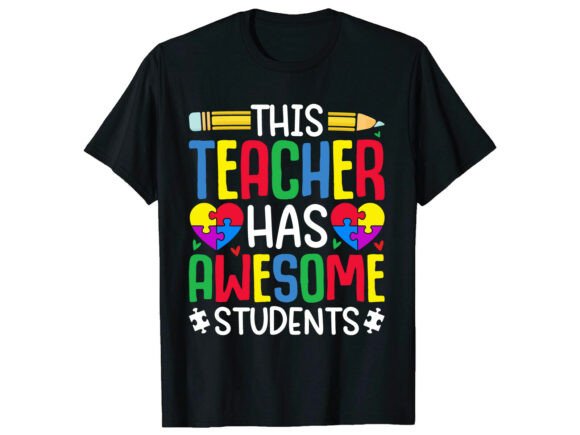
The first thing that strikes you about the Teacher Awesome Students Autism T-Shirt is its immediate emotional resonance. The design leverages the recognizable puzzle piece motif, a symbol deeply associated with autism awareness, but pairs it with typography that feels celebratory rather than clinical. For a designer, this balance is crucial. If the font is too rigid, it loses warmth; if the graphics are too chaotic, they become a stitching nightmare. This design manages to create a mood of supportive pride. It feels appropriate for educational settings, therapy centers, or family gatherings where neurodiversity is celebrated.
Visually, the layout appears balanced. The interplay between the text and the graphical elements suggests a thoughtful composition. However, when we translate this from a flat T-Shirt Designs concept to thread, we must consider how these shapes interact. The vibrant theme mentioned in the description implies a need for careful color selection. In embroidery, we do not have infinite gradients. We have distinct thread colors. Therefore, the success of this design relies heavily on how well the digitizer has separated these color fields to maintain clarity without excessive jump stitches or trims.
Real-World Application: Beyond the T-Shirt
While the product title specifies a t-shirt, my experience tells me that versatile Graphics like this thrive in multiple formats. I tested the mental model of this design on various substrates. Imagine this stitched onto a canvas tote bag design. The sturdy fabric would support the stitch density well, making it a fantastic item for teacher appreciation weeks or school fundraisers. The durability of embroidery on canvas means the message lasts, unlike printed ink which may crack over time.
Consider also sweatshirt embroidery. A fleece or cotton-blend hoodie provides a plush background that can make the raised texture of the stitches pop. Here, the Teacher Awesome Students Autism T-Shirt design could serve as a left-chest logo or a larger back piece. For smaller applications, such as an embroidered patch, the design’s boundaries must be clean. Patches require tight satin borders to prevent fraying, so I would look closely at the edge definition of the puzzle pieces. If the original file includes a proper border, it becomes a highly sellable handmade product for Etsy sellers looking to offer iron-on accessories.
For those interested in baby embroidery, caution is advised. While the message is sweet, the scale matters. A design intended for an adult chest might overwhelm a onesie. However, if scaled down appropriately and stitched with finer threads, it could work for a sibling shirt or a special keepsake. Always check the minimum recommended size before attempting custom apparel for infants.
Technical Considerations for Stitching Success
When preparing to stitch the Teacher Awesome Students Autism T-Shirt, technical preparation is half the battle. One of the primary concerns with any design featuring text and intricate symbols like puzzle pieces is stitch density. If the density is too high on a lightweight fabric, you risk puckering. If it is too low, the fabric may show through, ruining the vibrancy. I always recommend testing the design on a scrap piece of the exact fabric you intend to use. This is non-negotiable for professional results.
Stabilizer choice is equally critical. For knit fabrics like t-shirts, a cut-away stabilizer is generally preferred to provide long-term support, especially if the garment will be washed frequently. For woven fabrics like tote bags or aprons, a tear-away might suffice, but only if the stitch count is moderate. Since the exact stitch count is not provided in the brief, you must verify this in your software before hooping. A high-density design on a stretchy cap requires a different approach than on a stable pillow cover.
Color contrast is another practical hurdle. The description mentions "vibrant" themes. In embroidery, this means selecting thread colors that stand out against your base fabric. If you are stitching on a dark navy sweatshirt, ensure the puzzle pieces are bright enough to be legible. Conversely, on white fabric, avoid pastels that may disappear. I suggest creating a printable mockup or using your embroidery software’s 3D preview to simulate different thread combinations. This helps you visualize the final finished product before wasting expensive thread.
Navigating Challenges: Small Hoops and Textured Fabrics
Not every project is straightforward. If you plan to use this design on curved surfaces like caps, you must ensure the design fits within the standard cap frame, usually around 2.5 to 3 inches in height. Detailed corners in puzzle pieces can sometimes cause thread breaks if the needle cannot turn sharply enough. Inspect the digitizing for smooth curves. Additionally, tiny lettering can become illegible if the design is scaled down too far. Always zoom in on your screen to check the smallest text elements. If they look like blobs, they will stitch as blobs.
Textured fabrics present another challenge. On terrycloth towels or fuzzy fleece, small details can get lost. In these cases, consider using an applique design technique if the file supports it, or opt for a heavier weight thread to add definition. For dark fabrics, ensure your underlay stitches are sufficient to prevent the fabric color from bleeding through the top stitches. This is where reviewing the digital embroidery file settings in your machine or software becomes essential.
Commercial Value and Brand Consistency
For Etsy sellers and craft business owners, the Teacher Awesome Students Autism T-Shirt design offers more than just aesthetic appeal; it offers market relevance. Autism awareness is a significant niche, and products that speak directly to teachers and families of neurodivergent students have high emotional value. However, professionalism drives sales. A poorly stitched design damages brand trust. Ensure that your tension is perfect, your bobbin thread matches, and your hooping is straight. These details signal quality to the buyer.
Using this design in commercial embroidery projects requires strict adherence to licensing. Before selling any small shop product or including this in a bundle of design assets, confirm the license terms. Most designers allow finished physical sales but restrict the redistribution of the digital file itself. Respecting these terms protects your business and supports the creative community.
Final Verdict for the Practical Designer
The Teacher Awesome Students Autism T-Shirt is a promising candidate for a variety of embroidery project types, from holiday embroidery gifts to year-round personalized gift items. Its strength lies in its meaningful message and balanced composition. However, its success depends entirely on execution. Test your thread colors, respect the hoop size limitations, and choose the right stabilizer for your fabric. By treating this design with the technical respect it deserves, you can create a finished product that is not only visually appealing but also durable and professionally presented. Whether you are making a single gift or stocking your online store, this design has the potential to resonate deeply with its audience when stitched with care.