Review: Teacher of the Sweetest Bunnies PNG for Embroidery
As a designer who spends more time staring at stitch maps than I do sleeping, I have learned to look past the glossy mockups. When I first opened the Teacher of the Sweetest Bunnies PNG, my immediate reaction was not just about the cuteness factor, though it is undeniably high. My mind went straight to the mechanics of production. How will this translate from a flat digital graphic to a textured, threaded reality? For those of us running small embroidery businesses or crafting personalized gifts, the gap between a digital embroidery file and a finished product is where profits are made or lost.
First Impressions: Mood and Layout Analysis
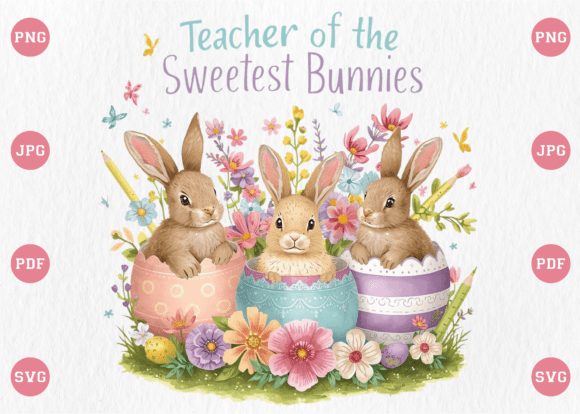
The visual personality of this design leans heavily into warmth and approachability. The theme suggests a springtime classroom, a preschool setting, or a gentle Easter celebration. From a layout perspective, the composition appears balanced, which is crucial for embroidery. Uneven weight distribution in a design can cause hoop burn or fabric distortion during stitching. The "sweetest bunnies" motif implies soft curves rather than sharp, aggressive angles. This is good news for stitch quality, as curved lines generally allow for smoother satin stitch transitions and fewer thread breaks compared to intricate, jagged geometries.
However, because this is provided primarily as a Graphics asset in high-resolution formats like JPG and PNG (4500×5400 at 300 dpi), along with SVG and PDF, we must address the elephant in the room: this is not inherently a native machine embroidery format like PES or DST. This distinction is vital. As an experienced reviewer, I see this file set as a hybrid asset. It is perfect for printable mockup creation, sublimation transfers, or as a reference template for manual digitizing. If you are an Etsy seller looking to create T-Shirt Designs via print-on-demand, this file is ready to go. But if you are sitting at an embroidery machine, you need to treat this as a source image, not a final embroidery file.
Real-World Application: The Custom Tote Bag Test
To evaluate its practical utility, I mentally placed this design on a natural cotton canvas tote bag. This is a staple small shop product for teachers and parents. The high contrast of the PNG allows for easy tracing or transfer onto fabric. If you are using this for an applique design scenario, the clear outlines in the SVG file would be excellent for cutting fabric shapes. Imagine layering pastel felt bunnies onto a neutral bag background. The thread colors you choose here will define the success of the project. Soft pinks, mint greens, and creamy whites would enhance the "sweet" aesthetic, while bold primaries might clash with the intended mood.
For sweatshirt embroidery, the stakes are higher. A fleece or French terry fabric has a pile that can swallow small details. If you plan to digitize this design from the provided PNG for a hoodie, you must simplify. The fine details visible in the 300 dpi image may need to be merged into larger fill stitch areas to prevent the threads from sinking into the fabric. A personalized gift like this needs to be legible from three feet away. If the bunny faces become muddy blobs of thread, the emotional impact is lost.
Navigating Fabric and Hoop Constraints
Where should you use caution? Any design with significant detail struggles on textured or stretchy fabrics without proper stabilization. If you are attempting this on a cap or a curved surface, the density of the design becomes critical. A heavy stitch density on a unstructured cap will cause it to collapse. You would need to use a stiff backing stabilizer and potentially reduce the overall size of the design to fit within a standard 4x4 or 5x7 hoop size.
Furthermore, consider the fabric color. The PNG format allows you to preview the design on dark backgrounds easily. However, embroidery thread does not blend like ink. If you stitch this on a black navy shirt, you cannot rely on the white spaces in the PNG to remain empty; you must decide if those areas will be left as negative space (the fabric showing through) or filled with white thread. Negative space can look elegant but risks looking incomplete if the gaps are too large. For baby embroidery items, such as onesies, ensure that any dense stitching is backed with a soft cut-away stabilizer to prevent irritation against sensitive skin.
Commercial Value and Brand Consistency
For commercial embroidery professionals, consistency is key. Using a high-quality graphic like Teacher of the Sweetest Bunnies PNG as a base ensures that your branding materials, social media posts, and physical products share the same visual language. You can use the included PDF and SVG files to create cohesive design assets for your online store. This builds customer trust. When a buyer sees a professional mockup that matches the final handmade product, return rates drop and satisfaction rises.
This design fits naturally into seasonal collections. It is ideal for holiday embroidery projects surrounding Easter or spring breaks. It also works well for end-of-year teacher gifts. The versatility of having JPG, PNG, SVG, and PDF means you are not locked into one production method. You can offer a printed version on a mug and an embroidered version on a pillow cover, using the same core artwork. This efficiency is crucial for craft business owners who need to maximize their output without redesigning from scratch.
Practical Designer Notes for Execution
Before you commit to a full production run, follow these steps to ensure quality:
- Test on Scrap Fabric: Never stitch directly on your final garment. Use a similar weight and texture scrap to test tension and density.
- Check Thread Contrast: Ensure your thread colors stand out against the fabric. A low-contrast combination will make the design disappear.
- Verify Licensing: While the product description mentions use on POD sites, always confirm the specific license terms for commercial sales of physical embroidered goods. Some licenses allow personal use only, while others permit unlimited commercial sales.
- Digitize with Care: If converting this PNG to a machine format, pay attention to underlay stitches. Proper underlay prevents shifting and improves the longevity of the embroidered patch or direct stitch.
- Mockup in Black and White: Convert the PNG to grayscale to check for value contrast. If the design looks flat in black and white, it will lack depth when stitched.
In conclusion, Teacher of the Sweetest Bunnies PNG is a robust asset for designers who understand the difference between print graphics and embroidery constraints. It offers high-resolution flexibility for various T-Shirt Designs and printable applications. For embroiderers, it serves as an excellent template for creating custom, heartwarming pieces. By respecting the limitations of fabric and thread, and by utilizing the provided file formats wisely, you can transform this digital graphic into a tangible, high-value finished product that resonates with customers seeking warmth and charm in their handmade items.